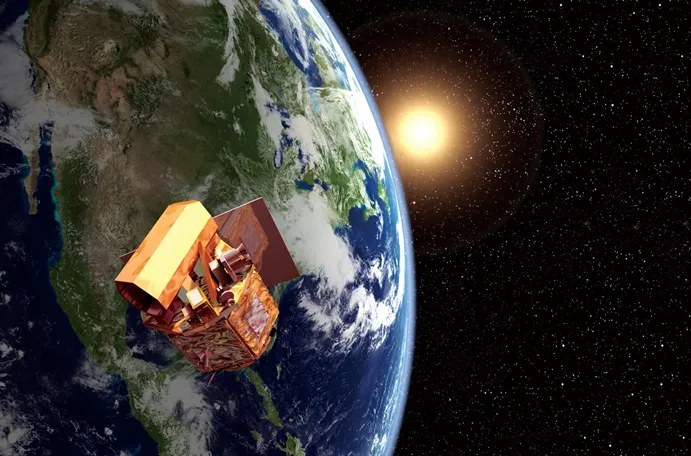
福爾摩沙衛星二號 ISUAL 任務
任務概觀
ISUAL(Ionospheric and Atmospheric Lightning Activity),意為「電離層和大氣閃電活動」,是搭載於福爾摩沙衛星二號(FORMOSAT-2)的主要科學酬載。該任務於2004年5月21日隨著福爾摩沙衛星二號升空,運作至2017年,是全球首個在同步軌道上執行近距離觀測高層大氣放電現象的任務。
基本資訊
- 衛星名稱: 福爾摩沙衛星二號(FORMOSAT-2)
- 發射日期: 2004年5月21日
- 發射載具: 俄羅斯質子-M火箭(Proton-M)
- 運行軌道: 同步軌道(Geostationary Orbit, GEO),距地表約36,000公里
- 軌道位置: 120°E
- 運行時間: 2004年5月~2017年
- 任務狀態: 已除役
科學任務與目標
ISUAL 任務的主要科學目標包括:
-
研究高層大氣放電現象
- 觀測閃電的光譜特性
- 研究紅精靈(Red Sprites)、藍色噴流(Blue Jets)等高空放電現象
- 探討閃電與電離層的相互作用
-
監測電離層動態
- 研究電離層中的中性風與帶電粒子行為
- 分析太陽風與磁層對電離層的影響
- 了解太空天氣對地球空間環境的影響
-
氣候與大氣研究
- 監測溫室氣體濃度變化
- 研究臭氧層變化
- 觀測雲層特性和大氣動力
主要科學儀器
ISUAL 搭載的主要科學儀器包括:
- 紫外線成像儀:捕捉高層大氣的通道輻射和閃電光
- 全天相機:進行全天的大氣光學觀測
- 磁力計與電場儀:測量磁場與電場變化
- 太陽輻射儀:監測太陽輻射強度
重要科學發現
在長達13年的運作期間,ISUAL 任務取得了多項重要科學成果:
-
高空放電現象的系統性研究
- 獲得全球首套完整的高空放電原始數據
- 發現並詳細研究了紅精靈、藍色噴流等罕見現象
- 揭示了這些現象與地面閃電的相互關係
-
電離層動態過程的深入理解
- 發現音波重力波在電離層中的傳播特性
- 研究了行星波對電離層的调制作用
- 探討了太陽活動與電離層的耦合機制
-
全球尺度的大氣監測
- 獲得長期的全球溫室氣體分布數據
- 監測臭氧層變化趨勢
- 提供了寶貴的氣候研究基礎數據
台灣的貢獻
夏漢民太空科技中心(原名國立成功大學太空與電漿科學研究所)與國家太空中心密切合作,在 ISUAL 任務中發揮了重要角色:
- 科學規劃: 參與任務科學目標制定與優化
- 數據分析: 進行高層大氣現象與電離層數據的深層分析
- 國際合作: 與美國、日本等國際研究機構合作開展科學研究
- 人才培育: 培養了多位太空科學與大氣物理領域的專家
科學論文與成果
ISUAL 任務產出了超過百篇的 SCI 期刊論文,發表於《Journal of Geophysical Research》、《Geophysical Research Letters》等頂尖國際期刊,為全球大氣和太空物理研究提供了重要的觀測數據支持。
任務影響與遺產
ISUAL 任務的成功,不僅促進了台灣在太空科學領域的國際影響力,更為大氣和太空物理研究奠定了重要基礎。該任務獲得的數據與科學發現,至今仍被全球研究機構廣泛應用於相關研究中。
後續任務
ISUAL 任務的成功經驗,為台灣隨後發射的福爾摩沙衛星系列(如福衛七號、福衛八號等)在太空科技領域的発展提供了重要參考。中心在 ISUAL 取得的經驗基礎上,繼續參與新一代衛星任務的科學規劃與數據分析工作。
結語
福爾摩沙衛星二號 ISUAL 任務代表了台灣在太空科學領域的里程碑。透過這一任務,台灣科學家對地球高層大氣的認識大幅提升,並在國際太空科學研究中確立了重要地位。儘管該任務已於2017年圓滿結束,但其留下的科學遺產將繼續指引未來的太空科學研究方向。
Mission Overview
ISUAL (Ionospheric and Atmospheric Lightning Activity) was the primary scientific payload aboard FORMOSAT-2 (FORMOSAT-2). The mission launched on May 21, 2004, and operated until 2017, making it the first mission to conduct close-range observations of high-altitude atmospheric discharge phenomena from geostationary orbit.
- Satellite Name: FORMOSAT-2 (Formosa Satellite-2)
- Launch Date: May 21, 2004
- Launch Vehicle: Russian Proton-M Rocket
- Orbital Altitude: Geostationary Orbit (GEO), approximately 36,000 km above Earth’s surface
- Orbital Position: 120°E
- Operational Period: May 2004 – 2017
- Mission Status: Retired
Scientific Objectives and Goals
The ISUAL mission’s primary scientific objectives include:
-
Research on High-Altitude Atmospheric Discharge Phenomena
- Observation of lightning spectral characteristics
- Study of upper atmospheric discharge phenomena such as red sprites and blue jets
- Investigation of the interaction between lightning and the ionosphere
-
Ionospheric Dynamics Monitoring
- Study of neutral wind and charged particle behavior in the ionosphere
- Analysis of the effects of solar wind and magnetosphere on the ionosphere
- Understanding the impact of space weather on Earth’s space environment
-
Climate and Atmospheric Research
- Monitoring of greenhouse gas concentration changes
- Investigation of ozone layer variations
- Observation of cloud characteristics and atmospheric dynamics
Principal Scientific Instruments
The ISUAL payload included the following major scientific instruments:
- Ultraviolet Imaging Spectrometer: Capturing atmospheric channel radiation and lightning from the upper atmosphere
- All-Sky Camera: Conducting all-sky optical observations of the atmosphere
- Magnetometer and Electric Field Instrument: Measuring magnetic field and electric field variations
- Solar Radiation Monitor: Monitoring solar radiation intensity
Major Scientific Discoveries
During its 13 years of operation, the ISUAL mission achieved numerous significant scientific results:
-
Systematic Research on High-Altitude Discharge Phenomena
- Obtained the first comprehensive global dataset of high-altitude discharge phenomena
- Discovered and studied rare phenomena such as red sprites and blue jets
- Revealed the relationship between these phenomena and ground-level lightning
-
Deepened Understanding of Ionospheric Dynamics
- Discovered the propagation characteristics of acoustic-gravity waves in the ionosphere
- Researched planetary wave modulation of the ionosphere
- Explored the coupling mechanism between solar activity and the ionosphere
-
Global-Scale Atmospheric Monitoring
- Obtained long-term global greenhouse gas distribution data
- Monitored ozone layer change trends
- Provided valuable baseline data for climate research
Taiwan’s Contribution
The Han-Min Hsu Center for Space Science and Technology (formerly the Institute for Space and Plasma Science at National Cheng Kung University) and the National Space Organization collaborated closely, playing important roles in the ISUAL mission:
- Scientific Planning: Participating in the development and optimization of mission scientific objectives
- Data Analysis: Conducted in-depth analysis of upper atmospheric phenomena and ionospheric data
- International Collaboration: Collaborated with international research institutions from the USA, Japan, and others
- Talent Development: Cultivated experts in space science and atmospheric physics
Scientific Publications and Achievements
The ISUAL mission produced over a hundred peer-reviewed journal articles published in top international journals such as the Journal of Geophysical Research and Geophysical Research Letters, providing important observational data support for global atmospheric and space physics research.
Mission Impact and Legacy
The success of the ISUAL mission not only advanced Taiwan’s international influence in space science but also established an important foundation for atmospheric and space physics research. The data and scientific discoveries from this mission continue to be widely utilized by research institutions worldwide for related studies.
Subsequent Missions
The successful experience from the ISUAL mission provided important reference for Taiwan’s subsequent FORMOSAT series launches (such as FORMOSAT-7 and FORMOSAT-8). Building on the experience gained from ISUAL, the Center continues to participate in scientific planning and data analysis for the next generation of satellite missions.
Conclusion
The FORMOSAT-2 ISUAL mission represents a milestone in Taiwan’s space science. Through this mission, Taiwanese scientists significantly enhanced their understanding of Earth’s upper atmosphere and established Taiwan’s important position in international space science research. Although this mission concluded successfully in 2017, its scientific legacy will continue to guide future directions in space science research.