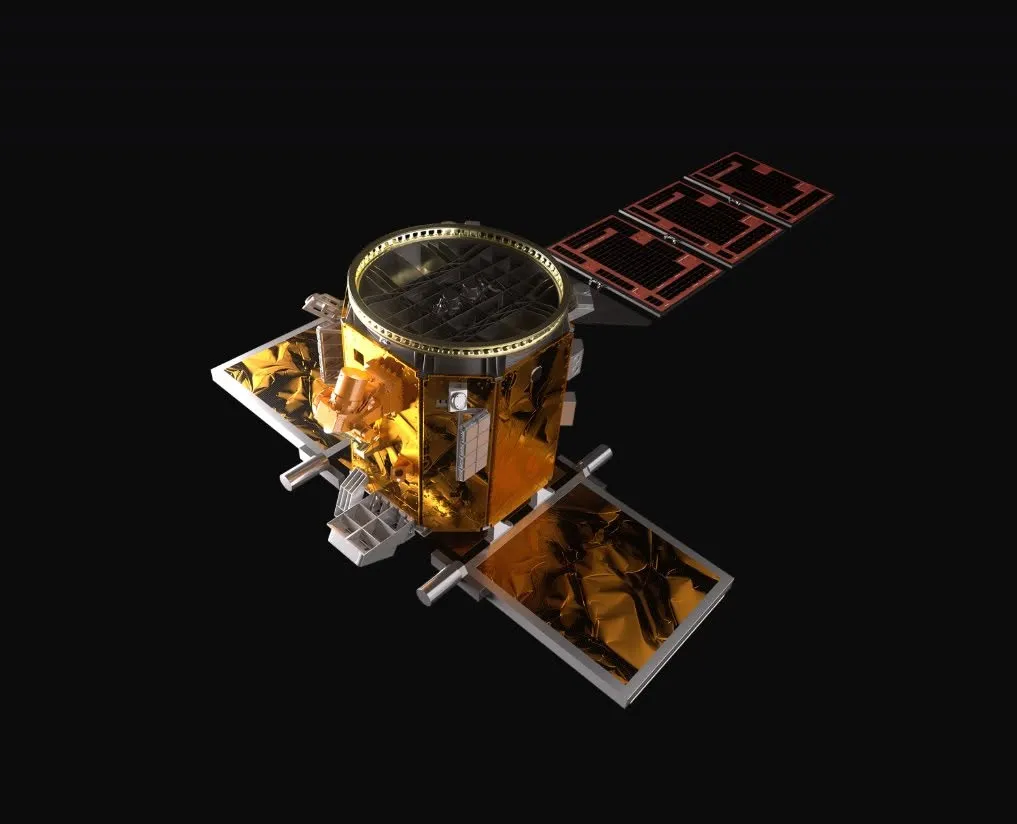
從電離層量測到多衛星協同觀測,掌握太空天氣的變化
當衛星導航出現定位誤差、無線電通訊受到干擾,原因有時並不在地面的設備,而是來自數百公里高空、不斷變化的電離層環境。
夏漢民太空科技中心參與我國福爾摩沙衛星九號(FORMOSAT-9)國家太空任務,與國立中央大學合作發展太空天氣探測儀(Space Weather Ionosphere Probe, SWIP),結合離子與電子現地量測,為衛星導航、通訊及太空天氣研究提供更完整的觀測資訊。
從 FS-9A 的科學酬載研製與系統整合,到 FS-9B 規劃中的多衛星協同觀測,中心延續福衛八號已取得的在軌驗證經驗,持續推進小型化電漿量測技術,讓太空觀測從單一衛星延伸至不同時間與高度的整合分析。
從電子到離子,描繪更完整的太空電漿環境
離子與電子現地量測 × 科學酬載系統整合
電離層中的帶電粒子持續受到太陽活動與太空天氣影響,其密度、溫度及流動狀態的變化,可能進一步影響衛星導航定位與無線電訊號的穩定性。
為了掌握更完整的電離層資訊,中心參與規劃搭載於福衛九號首顆衛星(FS-9A)的太空天氣探測儀(SWIP)研製,由成功大學開發的電子溫度密度儀(TeNeP)結合中央大學研製的小型電離層探測儀(CIP),同步量測電子與離子的關鍵參數。
電子溫度密度儀(TeNeP)|量測電離層中的電子變化
由成大研製的 TeNeP 採用小型、低功耗設計,直接量測衛星所在位置的電子溫度與電子密度,掌握電離層電漿環境的變化。相關技術已在福衛八號取得初期在軌觀測成果,並持續應用於福衛九號的儀器整合與開發。
小型電離層探測儀(CIP)|掌握離子的運動與組成
由中央大學研製的 CIP 可量測離子成分、密度、速度及溫度。與 TeNeP 相互搭配後,SWIP 能同時取得電子與離子的現地資訊,進一步分析電離層電漿的分布、運動及不規則變化。
從單機驗證到系統整合,讓每一筆太空資料可靠傳回
中心團隊完成 TeNeP 工程驗證電路研製與功能測試,並與中央大學合作確認 SWIP 酬載的電源、接地、量測時序及資料介面,逐步推進儀器與後端處理單元的系統整合。
除了儀器功能驗證,中心亦完成 TeNeP 的長時間資料傳輸及輻射耐受測試,確認系統在持續運作及輻射照射後的功能表現,逐步建立符合衛星任務需求的穩定性與可靠度,為後續飛行體研製與系統整合提供重要依據。
透過精密感測電路研製、資料傳輸驗證及跨系統整合,中心持續累積衛星科學酬載的工程經驗,展現從單一儀器開發到完整科學酬載整合的技術能力。
讓衛星接力觀測,追尋電離層擾動的變化線索
多衛星協同觀測 × GNSS 訊號與電漿量測分析
電離層並非靜止不變。同一片高空區域,在不同時間或高度可能呈現不同的電漿特性;其中的電漿不規則體,更可能使導航訊號產生閃爍、定位偏差或追蹤不穩定。
延續 FS-9A 的技術成果,中心與中央大學團隊共同提出福衛九號第二顆衛星(FS-9B)太空天氣探測儀(SWIP)研製規劃,期望結合既有 GNSS 掩星/反射(GNSS RO-R)觀測與電漿現地量測,從不同角度掌握太空天氣變化。
從單顆衛星到協同觀測,看見時間與高度的差異
FS-9B 規劃延續 CIP 與 TeNeP 的整合架構,配合 FS-9A 與福衛 8A 不同的軌道配置,逐步建立跨衛星的電離層觀測能力:
- 相近高度、不同時段| FS-9A 與 FS-9B 規劃在約 514 公里高度、相鄰夜間時段觀測,比較電漿不規則體在午夜前後的變化特徵。
- 相近時段、不同高度| 搭配約 561 公里高度的福衛 8A 量測資料,分析電離層電漿結構在不同高度的差異。
透過不同衛星的觀測資料相互補充,研究團隊可從時間與高度兩個面向分析電離層擾動,拓展單一衛星觀測所能提供的資訊。
把看不見的電漿變化,連結到導航與通訊訊號
FS-9B 預計將 SWIP 量測的電子與離子狀態,與 GNSS 掩星/反射所取得的訊號特徵進行比對,分析電離層擾動與訊號振幅、相位、追蹤穩定度及資料品質之間的關聯。
這種結合衛星現地量測與 GNSS 遙測的方式,有助於辨識實際電離層擾動所造成的訊號變化,為電離層模式驗證、太空天氣預報研究,以及導航與衛星通訊環境評估提供觀測依據。
延續既有飛行經驗,推進新一代電離層觀測技術
FS-9B 的科學酬載規劃,將延續福衛八號 TeNeP 的在軌驗證經驗,以及 FS-9A 的 CIP 與 TeNeP 整合成果,依據新衛星平台的機械、電力、資料與安裝條件進行必要調整。
中心將持續發揮電子參數量測、酬載介面整合與科學資料分析專長,結合中央大學的離子探測技術,探索由單一科學儀器走向多衛星電離層觀測的應用可能。
Tracking space-weather changes through ionospheric measurements and coordinated multi-satellite observations
When satellite navigation develops positioning errors or radio communications experience interference, the cause may not be equipment on the ground, but the constantly changing ionosphere hundreds of kilometers above Earth.
The Hsia Han-Min Space Technology Center participates in Taiwan’s FORMOSAT-9 national space mission. In collaboration with National Central University, the Center is developing the Space Weather Ionosphere Probe (SWIP), which combines in-situ ion and electron measurements to provide more complete observations for satellite navigation, communications, and space-weather research.
From scientific payload development and system integration for FS-9A to planned multi-satellite coordinated observations for FS-9B, the Center is building on the in-orbit verification experience gained from FORMOSAT-8 and advancing compact plasma-measurement technologies. This expands space observation from a single satellite to integrated analysis across different times and altitudes.
From electrons to ions, mapping a more complete space plasma environment
In-situ ion and electron measurements × Scientific payload system integration
Charged particles in the ionosphere are continually affected by solar activity and space weather. Changes in their density, temperature, and motion can in turn affect satellite-navigation positioning and the stability of radio signals.
To obtain more comprehensive ionospheric information, the Center is participating in the development of SWIP for the first FORMOSAT-9 satellite, FS-9A. SWIP combines the Electron Temperature and Density Probe (TeNeP), developed by National Cheng Kung University, with the Compact Ionospheric Probe (CIP), developed by National Central University, to measure key electron and ion parameters simultaneously.
Electron Temperature and Density Probe (TeNeP)|Measuring electron variations in the ionosphere
Developed by NCKU, TeNeP uses a compact, low-power design to directly measure electron temperature and density at the satellite’s position and track changes in the ionospheric plasma environment. The technology has already produced initial in-orbit observations aboard FORMOSAT-8 and continues to support instrument integration and development for FORMOSAT-9.
Compact Ionospheric Probe (CIP)|Characterizing ion motion and composition
Developed by National Central University, CIP measures ion composition, density, velocity, and temperature. Working with TeNeP, SWIP can obtain in-situ electron and ion information simultaneously, enabling further analysis of the distribution, motion, and irregular variations of ionospheric plasma.
From instrument verification to system integration, ensuring that every measurement returns reliably from space
The Center’s team completed the development and functional testing of the TeNeP engineering-verification circuitry. Working with National Central University, it also verified SWIP’s power, grounding, measurement timing, and data interfaces, progressively advancing system integration between the instruments and the backend processing unit.
In addition to verifying instrument functions, the Center completed long-duration data-transmission and radiation-tolerance tests for TeNeP. These tests confirmed system performance during continuous operation and after radiation exposure, progressively establishing the stability and reliability required for the satellite mission and providing an important basis for subsequent flight-unit development and system integration.
Through precision sensing-circuit development, data-transmission verification, and cross-system integration, the Center continues to accumulate engineering experience in satellite scientific payloads and demonstrate its capabilities from individual instrument development to complete scientific payload integration.
Relay observations between satellites to trace changes in ionospheric disturbances
Coordinated multi-satellite observation × GNSS signal and plasma-measurement analysis
The ionosphere is not static. The same region of the upper atmosphere may exhibit different plasma characteristics at different times or altitudes, while plasma irregularities can cause navigation-signal scintillation, positioning errors, or unstable tracking.
Building on the technical results of FS-9A, the Center and National Central University have jointly proposed a SWIP development plan for the second FORMOSAT-9 satellite, FS-9B. The plan would combine existing GNSS radio-occultation and reflectometry (GNSS RO-R) observations with in-situ plasma measurements to characterize space-weather changes from multiple perspectives.
From a single satellite to coordinated observations across time and altitude
FS-9B is planned to continue the integrated CIP and TeNeP architecture. Together with the different orbital configurations of FS-9A and FORMOSAT-8A, it would progressively establish cross-satellite ionospheric observation capabilities:
- Similar altitude, different times| FS-9A and FS-9B are planned to observe at an altitude of approximately 514 km during adjacent nighttime periods, comparing how plasma irregularities change before and after midnight.
- Similar times, different altitudes| Measurements from FORMOSAT-8A at an altitude of approximately 561 km would support analysis of differences in ionospheric plasma structures at different altitudes.
By combining observations from multiple satellites, the research team can analyze ionospheric disturbances across both time and altitude, extending the information available from any single satellite.
Connecting invisible plasma variations to navigation and communication signals
FS-9B is expected to compare the electron and ion states measured by SWIP with signal characteristics obtained through GNSS occultation and reflectometry, analyzing relationships between ionospheric disturbances and signal amplitude, phase, tracking stability, and data quality.
Combining in-situ satellite measurements with GNSS remote sensing can help identify signal changes caused by actual ionospheric disturbances, providing observational evidence for ionospheric model validation, space-weather forecasting research, and assessment of navigation and satellite-communication environments.
Building on flight experience to advance next-generation ionospheric observation technology
The planned FS-9B scientific payload will build on the in-orbit verification experience of TeNeP aboard FORMOSAT-8 and the integrated CIP-TeNeP results from FS-9A, with necessary adaptations for the new satellite platform’s mechanical, power, data, and installation requirements.
The Center will continue to apply its expertise in electron-parameter measurement, payload interface integration, and scientific data analysis, together with National Central University’s ion-detection technology, to explore the transition from a single scientific instrument to multi-satellite ionospheric observation.