高中生自製立方衛星成功升空
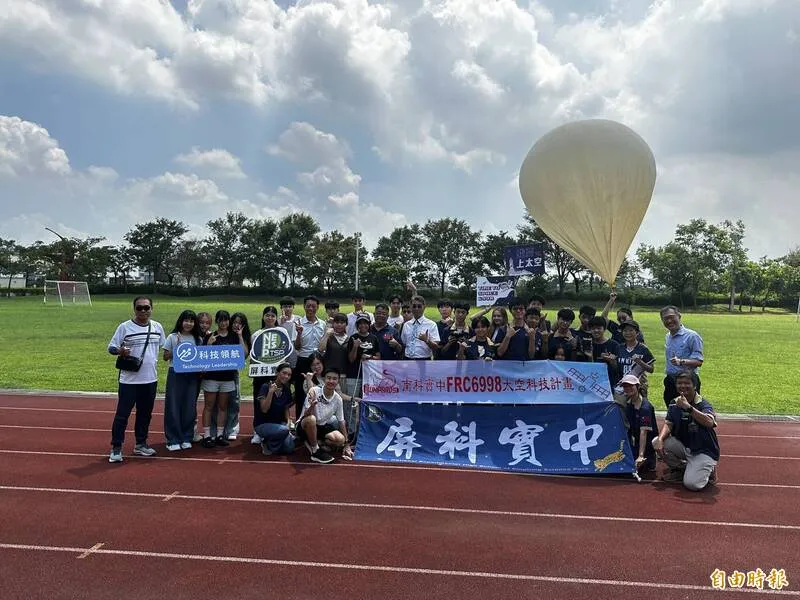
2025年9月21日,國立成功大學夏漢民太空科技發展中心(以下簡稱「本中心」)攜手國立南科國際實驗高級中學與屏東實驗高級中學,共同完成一項具指標性的太空教育計畫。兩校學生自主研發的立方衛星,在本中心陳炳志教授團隊的協助下,透過探空氣球順利升空,最高將抵達距地面約30公里的近太空環境,正式展開科學研究任務。
計畫背景與目標
本計畫旨在推動太空教育向下扎根,讓高中學生有機會實際參與衛星的設計、製作、測試與升空全流程。透過「做中學」的方式,培養下一代太空人才。
本次任務共有20名高中生參與,他們完整體驗了太空工程的全包流程:從立方衛星的設計、製作、測試到實際升空。衛星搭載感測模組,將蒐集氣壓、溫度、濕度及高空輻射等數據,為學生提供跨領域整合與實作的寶貴經驗。
任務特色與創新
陳炳志教授表示,此次計畫的特色在於將衛星製作過程簡化,首次由高中生在專業團隊引導下,完成設計並搭配實際飛行。不同於傳統火箭發射,本次採用探空氣球載具,降低成本與技術門檻,同時點燃年輕世代對太空領域的熱情。
人文溫度
其中,南科實中更在立方衛星上懸掛應屆畢業生的祈福卡,期盼學測順利,為本次科學實驗增添了溫暖的人文意涵。
校方支持與期許
南科實中校長蔡明輝表示,能讓學生在高中階段親身參與太空科學探索,是難得而深刻的學習經驗。屏科實中校長陳志偉也指出,學校將太空科技納入課程,並期待持續與大學及科研單位攜手合作,拓展學生的科學視野。
中心願景與未來規劃
本中心長期致力於推動太空科技發展與教育普及。此次計畫不僅展現大學與高中合作的典範,更為台灣培育下一代科學人才奠定基礎。我們期盼藉由更多跨域合作,持續推動青少年太空教育,開啟屬於台灣的新太空時代。
教育意義
此次任務的成功,不僅為臺灣太空教育寫下新頁,更證明了「太空不再遙不可及」的教育理念。夏漢民太空科技中心將持續推動更多太空教育計畫,為臺灣培育更多太空科技人才。
High School Students Successfully Launch a Self-Built CubeSat
On September 21, 2025, the Han-Min Hsu Center for Space Science and Technology at National Cheng Kung University (HMSSTC) partnered with Nanke International Experimental Senior High School and Pingtung Experimental Senior High School to complete a landmark space education project. With support from Professor Bing-Zhi Chen’s team, CubeSats independently developed by students from the two schools were launched successfully by high-altitude balloon, reaching near-space conditions at about 30 km above the ground and officially beginning their scientific mission.
Project Background and Objectives
This project aims to root space education at the pre-university level by allowing high school students to participate in the full workflow of satellite design, fabrication, testing, and launch. Through hands-on learning, students build interdisciplinary capability and practical engineering experience.
Twenty students participated in this mission and experienced the end-to-end aerospace engineering process. Their CubeSats carried sensor modules to collect pressure, temperature, humidity, and high-altitude radiation data, offering valuable cross-disciplinary learning opportunities.
Mission Features and Innovation
Professor Bing-Zhi Chen noted that the project streamlined the CubeSat development process and, for the first time, enabled high school students to complete design and real flight under professional guidance. Unlike conventional rocket launches, this mission used a high-altitude balloon platform to lower cost and technical barriers while inspiring student interest in space science.
Human Touch
Students from Nanke Experimental High School attached blessing cards from graduating seniors to one of the CubeSats as wishes for success in upcoming entrance exams, adding a warm and meaningful human element to the mission.
School Support and Aspirations
Principal Ming-Hui Tsai of Nanke Experimental High School stated that letting students directly engage in space science at the high school stage is a rare and profound learning experience. Principal Chih-Wei Chen of Pingtung Experimental High School also emphasized that space technology has been integrated into the school curriculum, and he expects continued collaboration with universities and research institutions to broaden students’ scientific horizons.
Center Vision and Future Plans
HMSSTC has long been committed to advancing space technology and promoting science education. This project demonstrates a model of university–high school collaboration and lays a foundation for cultivating Taiwan’s next generation of science and engineering talent. The Center will continue promoting youth space education through cross-disciplinary cooperation.
Educational Significance
The success of this mission marks a new chapter in Taiwan’s space education and shows that space is no longer out of reach for younger generations. HMSSTC will continue launching similar educational initiatives to cultivate future space professionals.
