首位具有台灣血統的 NASA 太空人林琪兒(Dr. Kjell Lindgren)醫師於 4 月 24 日(五)造訪成功大學夏漢民太空科技中心,見證成大團隊成功執行各式國家太空任務的使命,並與中心學子熱絡互動,鼓舞成大年輕太空世代勇於挑戰更艱難的太空任務。
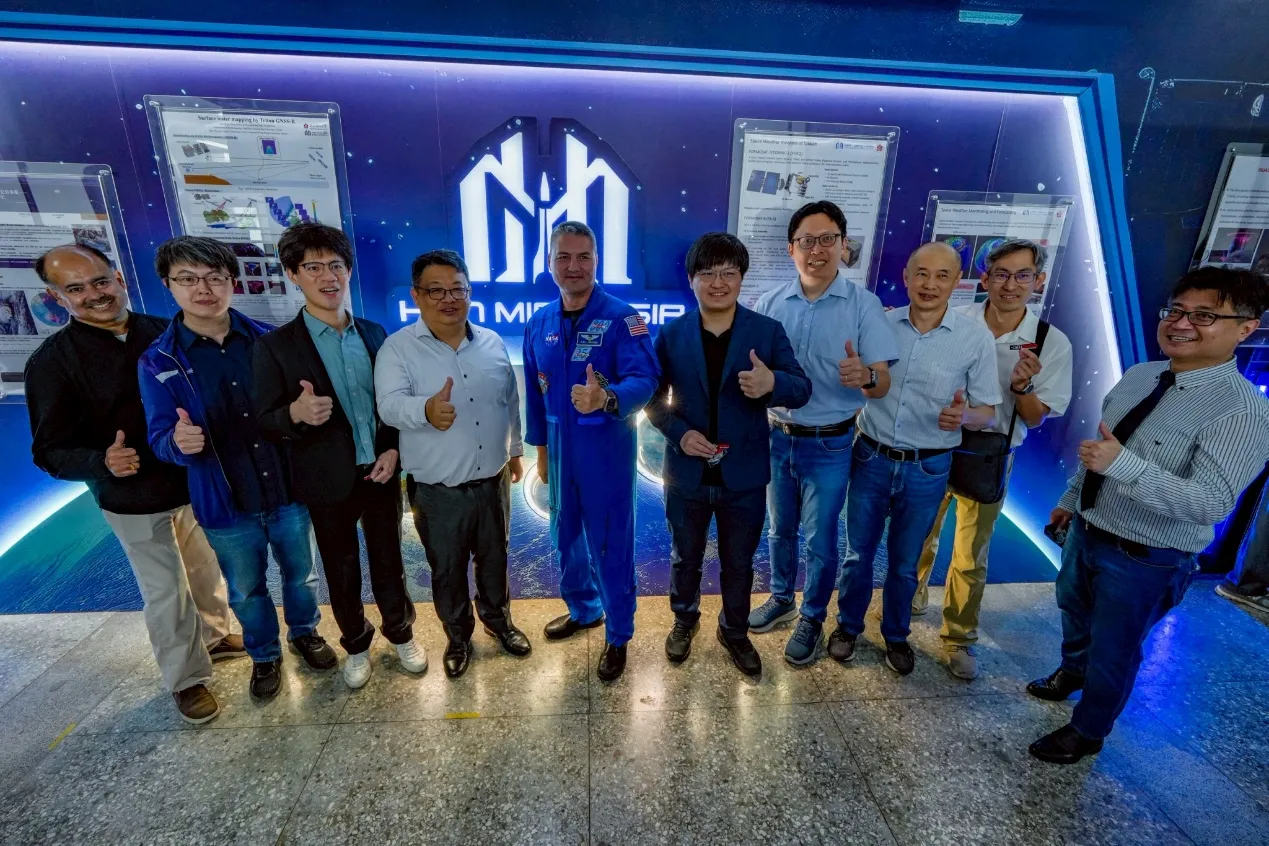 中心團隊成員(左至右):地科系查傑希研究員、地科系陳佳宏副教授、太空所林佳廷助理教授、物理系陳炳志教授、林琪兒醫師、電機系林家祥教授、地科系陳世平博士、測量系林昭宏教授、航太系郭泰延助理教授、地科系兼中心主任林建宏特聘教授
基於成功大學夏漢民前校長受李登輝總統之託而擘劃我國太空任務,為了紀念這位催生台灣太空探索計畫的前校長,成功大學以夏前校長之名於 2022 年創立校級太空科技中心,整合工學院、電資學院、理學院跨系所教師專長持續為我國國家太空任務開啟前瞻發展。今日團隊成員將這份使命感與太空人林琪兒醫師分享,並讓林琪兒醫師與執行福爾摩沙衛星二號、三號、六號、七號、八號、九號太空科學任務的成員有深度交流討論。
這其中包括中心成員物理系陳炳志教授分享福衛二號在低軌道高度觀測到的高空閃電,地球科學系陳佳宏副教授與查傑希博士介紹基於福衛三號、七號觀測所建立的太空天氣預報系統,地球科學系陳世平博士利用我國獵風者衛星進行的全球水文探測。特別值得一提的是中心成員電機系林家祥教授向太空人介紹如何用自行創立的 AI 演算法提升我國福衛八號影像的解析度以及光譜頻段數量,可以看得更精細、辨別出更多影像物種,對此林琪兒感到印象深刻。此次成大團隊在近期發射的福衛八號參與極深,包括影像自動化處理系統、解析度提升以及太空科學任務都與國家太空中心有深度合作。
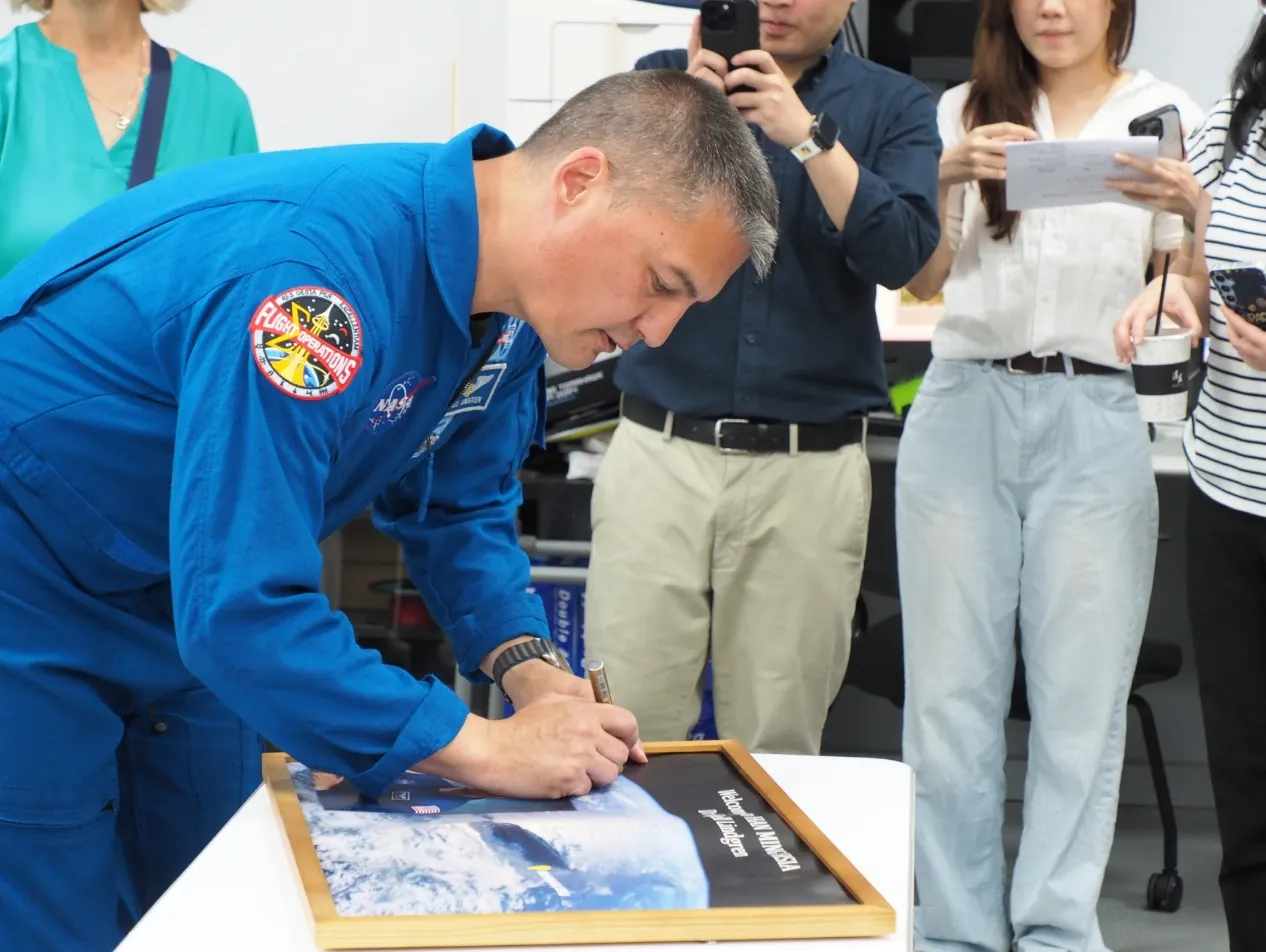 林琪兒醫師在國際太空站上親手拍攝的台灣照片簽名留念
參訪期間,航太系郭泰延助理教授特別介紹成大在火箭推進、太空電漿推進器的發展近況,太空系統工程研究所林佳廷助理教授與 15 位學生也開心的與太空人分享下週即將發射將應用於天然災害監測、無線電通訊實驗的立方衛星。林琪兒醫師對學生極為重視,一一與每位學生對話、贈送禮物,讓學生們獲得極大的鼓舞。
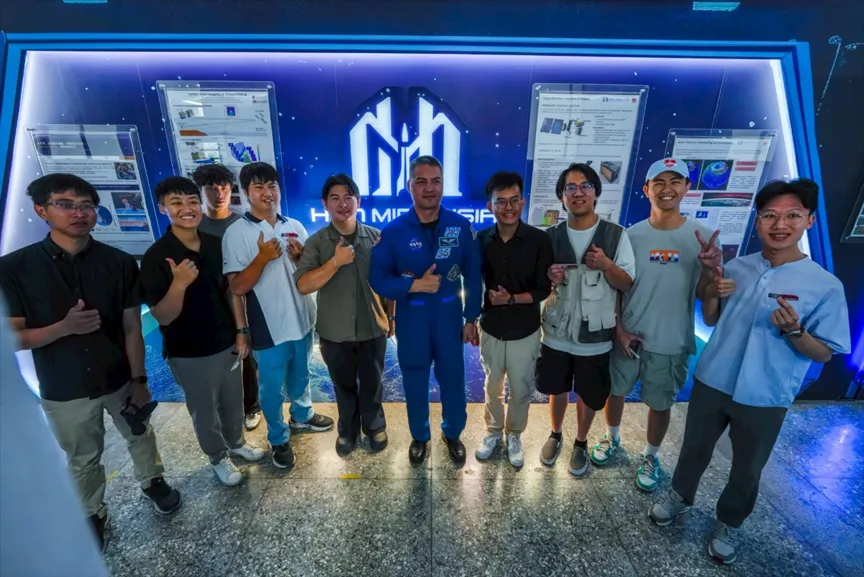 中心立方衛星學生團隊與林琪兒醫師合影
在人才培育方面,太空系統工程研究所的林佳廷助理教授展示由超過 30 名學生團隊自主研發的立方衛星以及相關的地面操控站設施,呈現夏漢民太空科技中心的教學研發成果。這個立方衛星將於下週在美國進行發射。
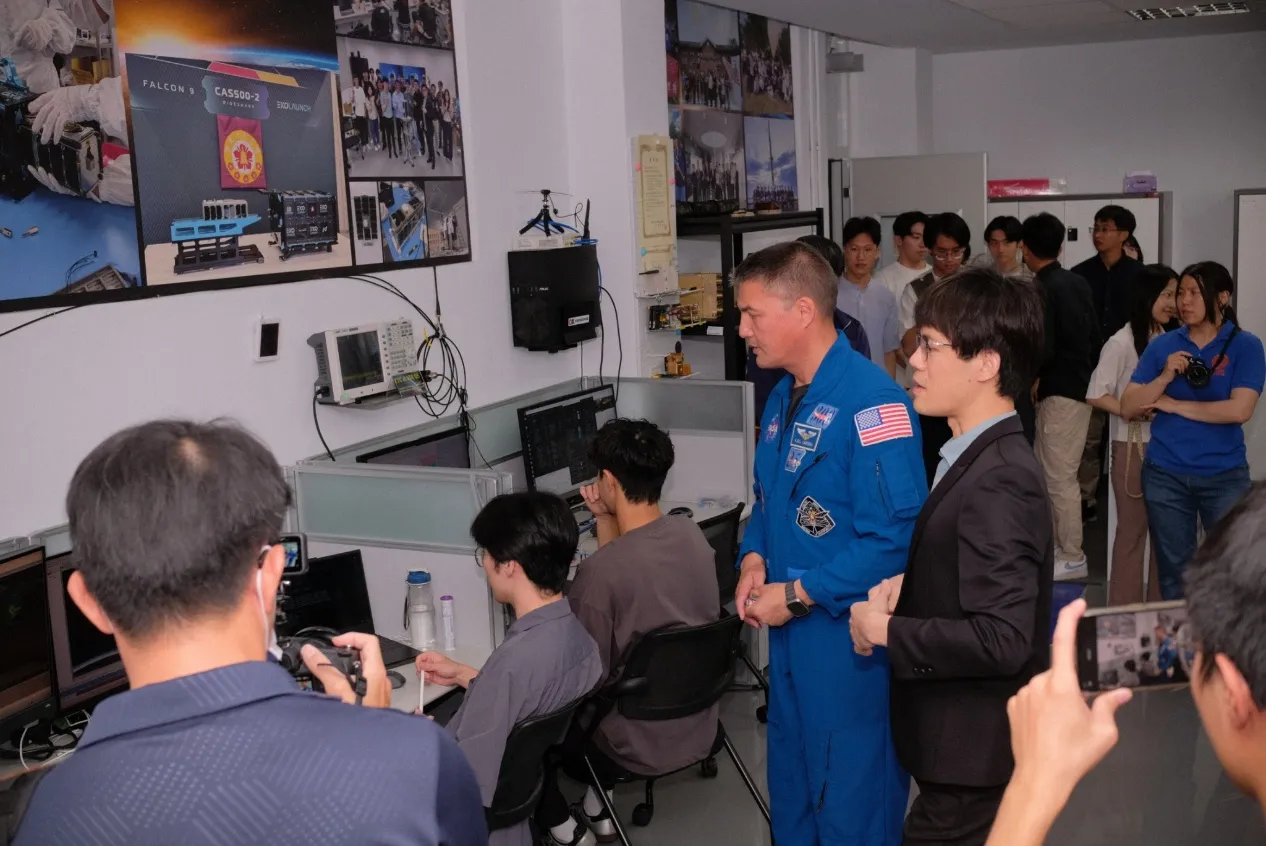 林琪兒醫師參觀中心地面操控站
本次活動中特別安排林琪兒醫師在其於國際太空站拍攝的台灣影像上親筆簽名留念,象徵台灣與國際太空社群之間的連結與交流。最後,他也熱情地與立方衛星學生團隊合影,鼓勵年輕學子持續投入太空科技領域。
林琪兒醫師對夏漢民太空科技中心在國家太空任務的參與、國際合作以及立方衛星發展等面向的成果表達高度肯定。夏漢民太空科技中心未來將持續以「國家任務、國際合作、立方衛星」為核心發展方向,深化科研能量並培育太空科技人才,積極推動台灣邁向國際太空舞台。
活動花絮
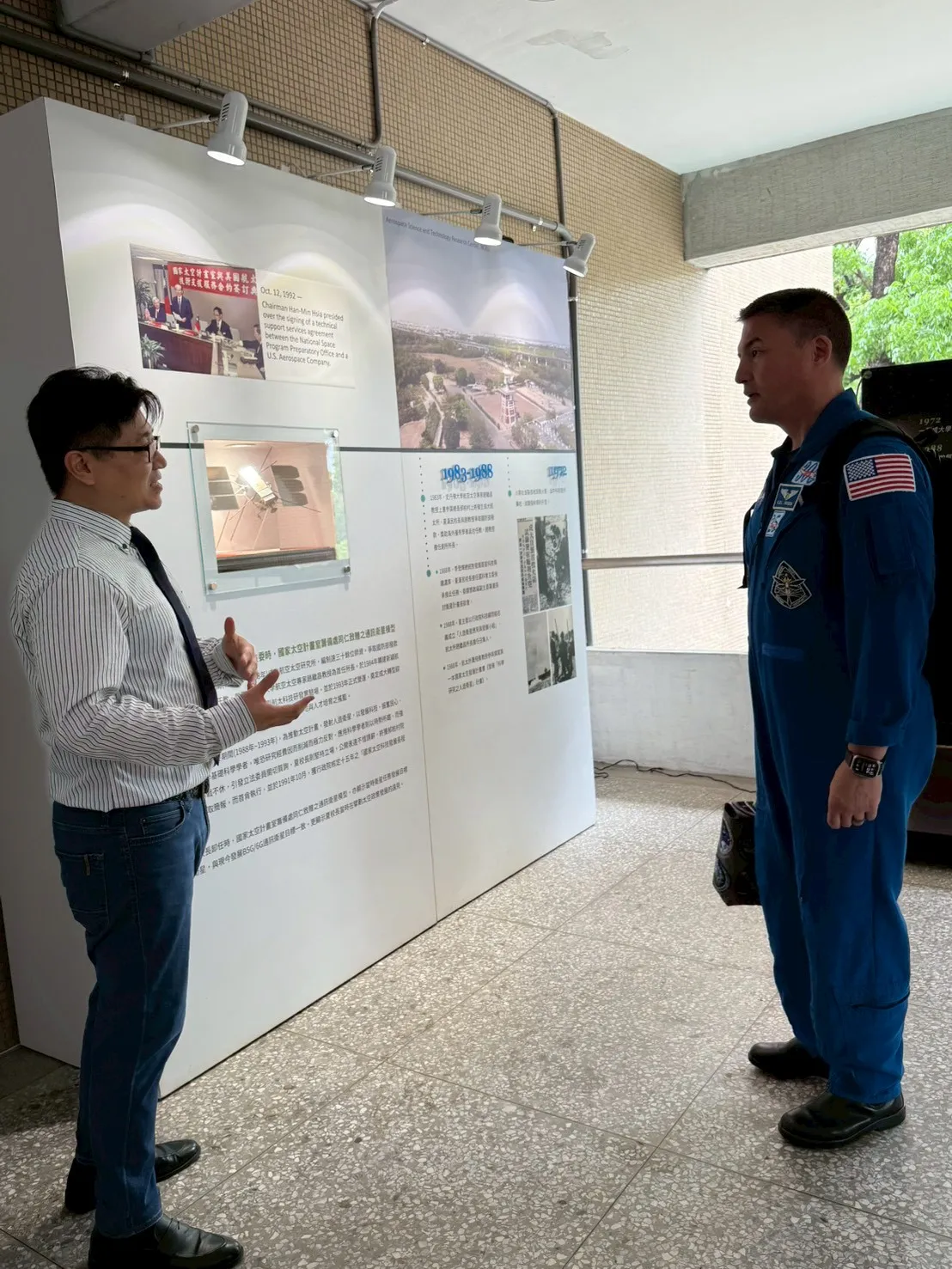 中心主任林建宏特聘教授 介紹 夏漢民太空科技中心的起源
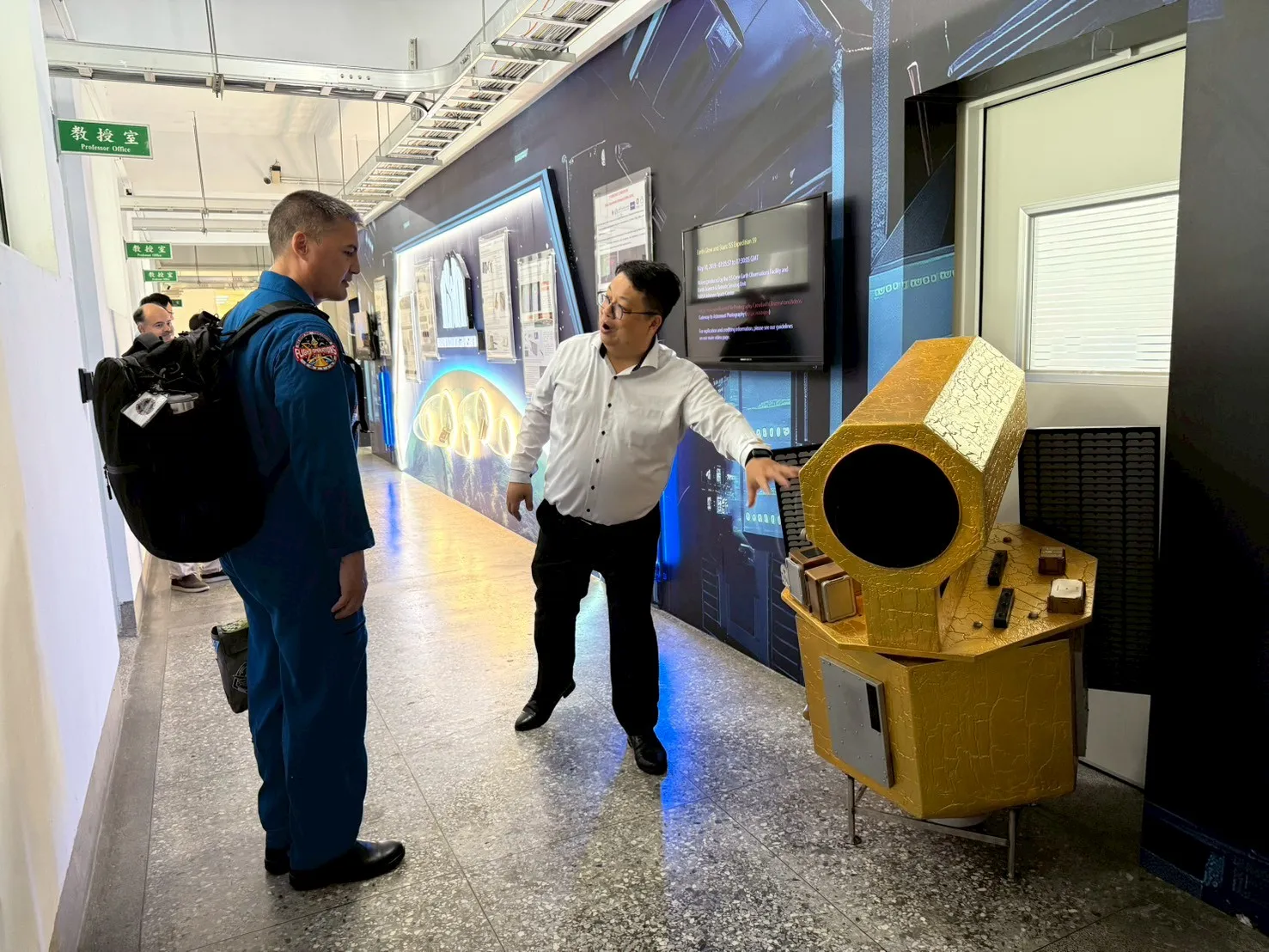 中心成員物理系陳炳志教授 介紹福衛二號高空閃電任務
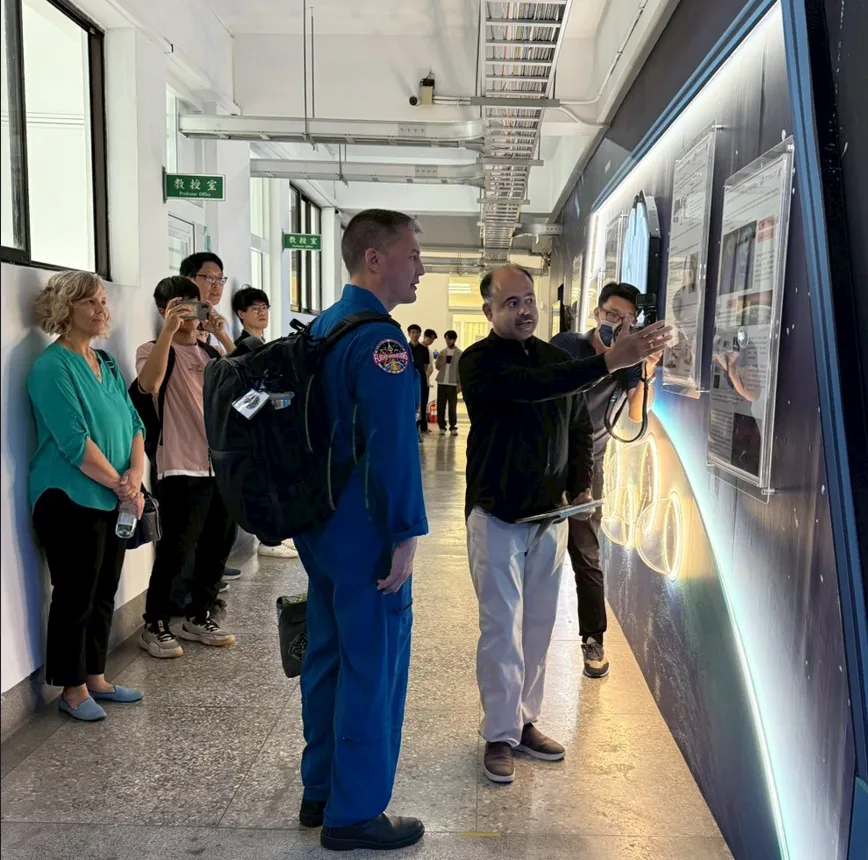 中心成員地科系查傑希研究員 介紹基於福衛三號、福衛七號觀測所建立的太空天氣預報系統
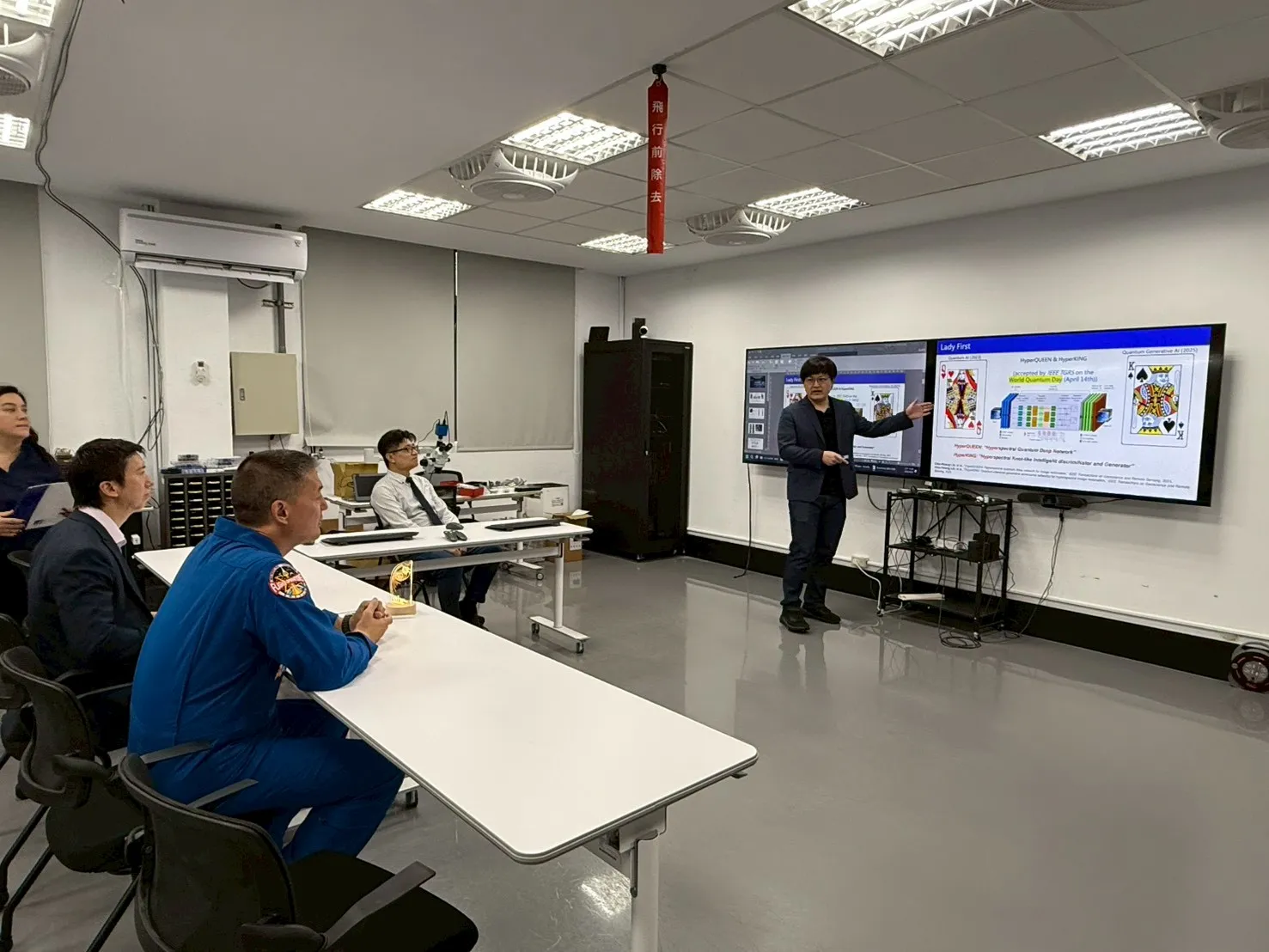 中心成員電機系林家祥教授 介紹利用 AI 技術提升福衛八號遙測影像解析度
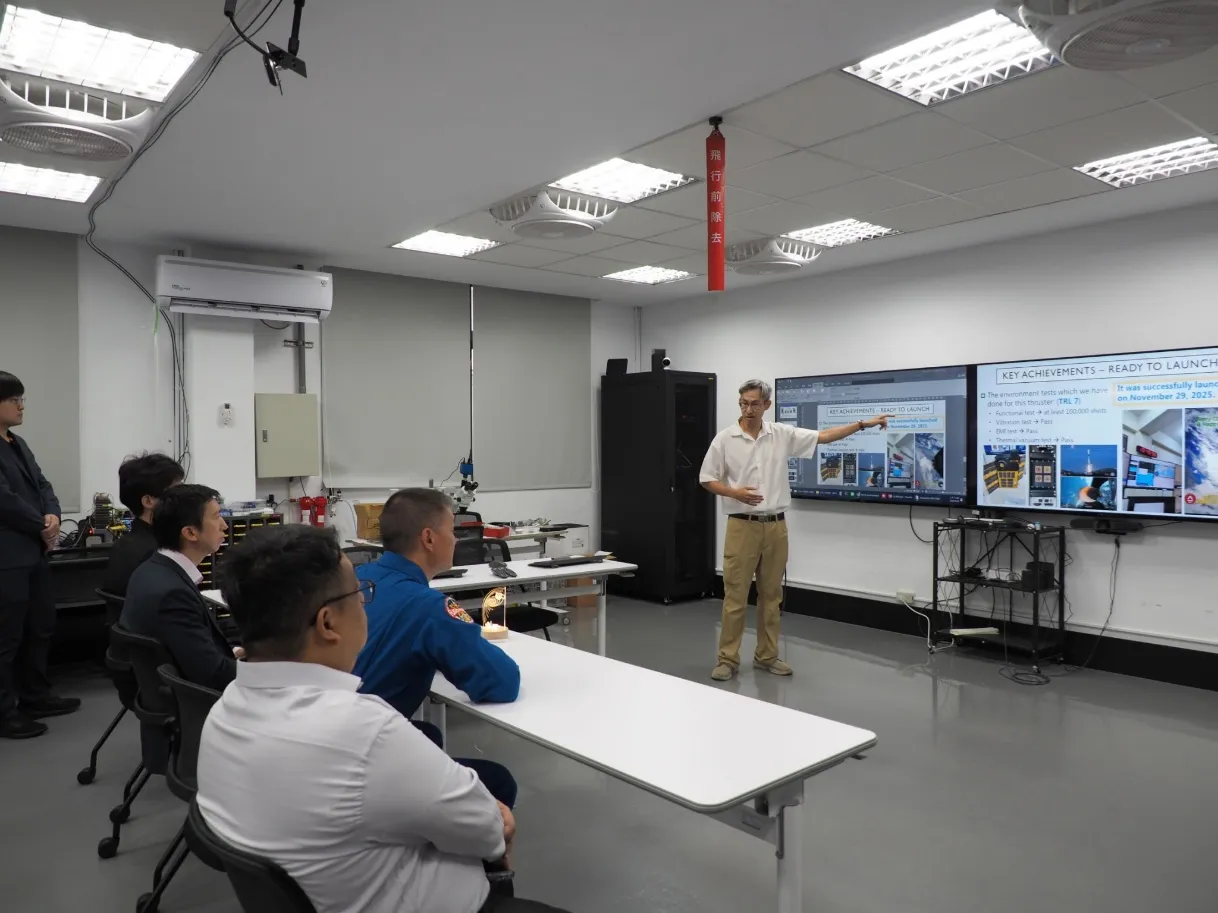 中心成員航太系郭泰延助理教授 介紹由航太系所自行研發的推進技術
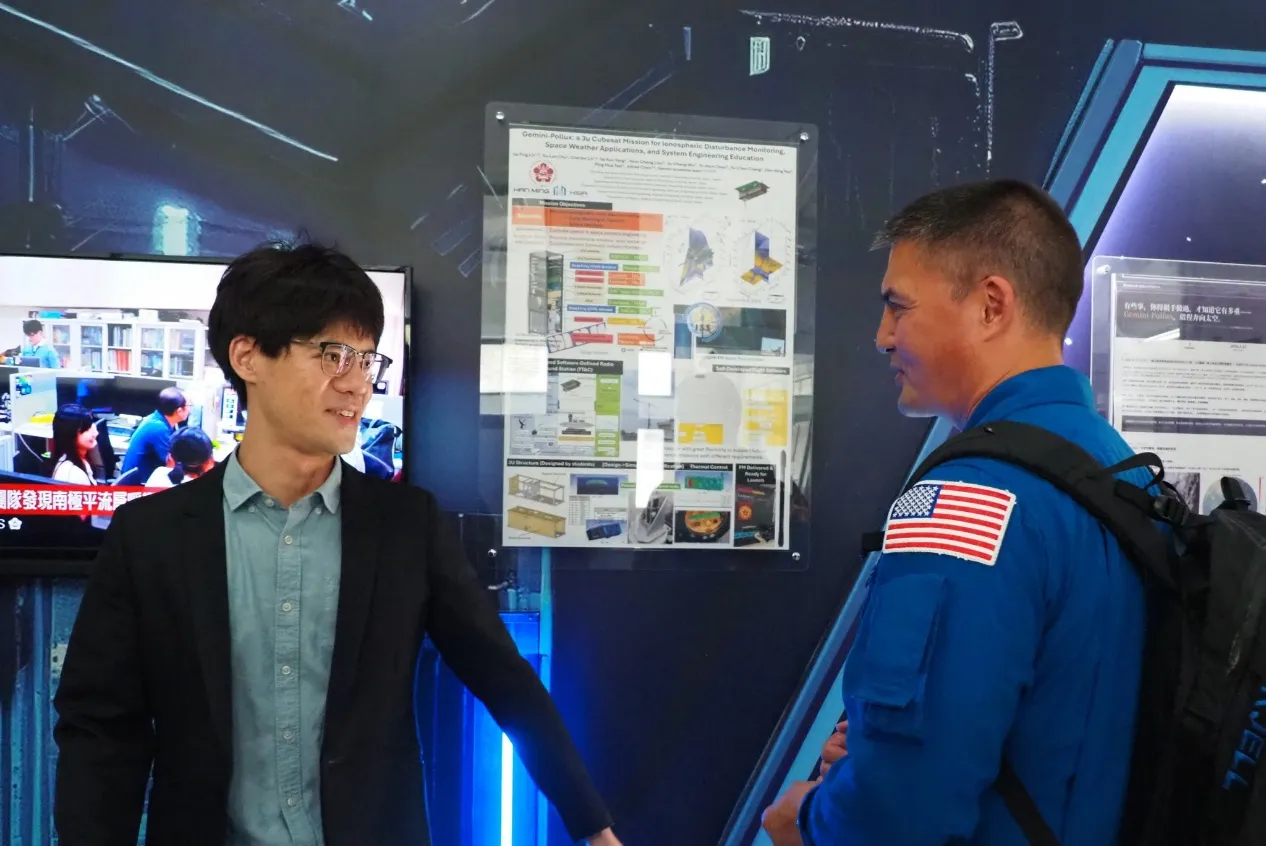 中心成員太空系統工程所林佳廷助理教授 介紹學生團隊自製立方衛星
On Friday, April 24, Dr. Kjell Lindgren, the first Taiwan-born NASA astronaut, visited National Cheng Kung University (NCKU) to deliver a highly anticipated keynote speech, igniting a wave of celestial excitement across the campus. Organized by the NCKU Office of International Affairs (OIA) as part of the Global Perspective Lecture Series, the event featured Dr. Lindgren leading the audience on a gravity-defying “Fantastic Journey into Outer Space.” Through rare and captivating visual footage, he vividly described the profound emotion of witnessing the Earth’s curvature from the International Space Station (ISS) and the unique challenges of conducting scientific experiments and living in microgravity. Dr. Lindgren’s inspiring insights successfully lowered the barriers to space technology, igniting a fervent passion for exploration among the students.
Center team members (from left to right): Researcher Chieh-Hsi Cha (Dept. of Earth Sciences), Associate Professor Chia-Hung Chen (Dept. of Earth Sciences), Assistant Professor Chia-Ting Lin (Inst. of Space System Engineering), Professor Bing-Chih Chen (Dept. of Physics), Dr. Kjell Lindgren, Professor Chia-Hsiang Lin (Dept. of Electrical Engineering), Dr. Shih-Ping Chen (Dept. of Earth Sciences), Professor Chao-Hung Lin (Dept. of Geomatics), Assistant Professor Tai-Yen Kuo (Dept. of Aeronautics and Astronautics), and Distinguished Professor Jann-Yenq Liu (Center Director and Dept. of Earth Sciences).
The lecture reached full capacity almost immediately after registration opened, reflecting the immense anticipation from the NCKU community. The atmosphere during the session was vibrant and interactive; students and faculty eagerly posed questions on a wide range of topics—from the applications of space medicine and the future of CubeSats to maintaining psychological resilience in extreme environments. Dr. Lindgren responded to each inquiry with warmth, humor, and professional depth. This close-up dialogue transformed the audience from mere spectators into fellow travelers navigating the vast ocean of interstellar knowledge alongside him.
Dr. Lindgren signing a photo of Taiwan he took from the International Space Station.
Beyond sharing his passion for space, Dr. Lindgren arrived in Tainan ahead of schedule to conduct field visits to NCKU’s two primary aerospace research hubs: the Han-Min Hsia Space Science and Technology Center and NCKU SPACE LAB, where NCKU demonstrated its world-class research and development capabilities.
The Han-Min Hsia Space Science and Technology Center focuses its strategic development on “National Missions, International Collaboration, and CubeSats.” The center holds a leading position in practical aerospace experience, having participated in numerous national-level space projects, including sounding rockets, FORMOSAT-2, 7, 8, 9, and the TRITON (Wind-Hunter) satellite. The center actively connects with experts from Japan, South Korea, Mongolia, the USA, Germany, Sweden, and Poland to promote transnational research and expand Taiwan’s influence in the global space sector. Furthermore, it is a vanguard for talent cultivation, integrating departments such as Aeronautics and Astronautics, Mechanical Engineering, Computer Science, Electrical Engineering, Physics, and Earth Sciences. The center’s 30-member student team, dedicated to the self-reliant R&D and launching of CubeSats, fully embodies the innovative vitality and scientific strength of the younger generation.
CubeSat student team with Dr. Kjell Lindgren.
As a recently established university-level center, the NCKU SPACE LAB is dedicated to integrating critical CubeSat systems and technologies. It drives advancements in communication, AI, and propulsion while building application platforms and industrial hubs. The team successfully launched three Taiwanese satellites in 2023 and 2025, which continue to execute their missions in orbit. This achievement underscores NCKU’s high level of maturity in the autonomous development of Low-Earth Orbit (LEO) satellites.
Dr. Lindgren visiting the ground control station.
Dr. Lindgren’s visit is not only a milestone for international exchange but also a significant affirmation of NCKU’s aerospace research teams. Moving forward, NCKU will continue to serve as a pioneer for Taiwan’s “National Team” in space technology. By combining the dynamic energies of the Han-Min Hsia Space Science and Technology Center and NCKU SPACE LAB, NCKU’s academic and scientific prowess in aerospace will continue to shine brightly across the global expanse of the stars.
Event Highlights
Center Director Jann-Yenq Liu introducing the origin of HMSSTC.
Professor Bing-Chih Chen introducing the FORMOSAT-2 high-altitude lightning mission.
Researcher Chieh-Hsi Cha introducing the space weather forecasting system built on FORMOSAT-3 and 7 observations.
Professor Chia-Hsiang Lin introducing AI technology for enhancing FORMOSAT-8 remote sensing image resolution.
Assistant Professor Tai-Yen Kuo introducing self-developed propulsion technology.
Assistant Professor Chia-Ting Lin introducing the student-made CubeSat.
